📚 How to Find & Acquire These Books
Many of these books are widely available, but some rarer titles require creative sourcing. Here are the best ways to build your library—from free digital copies to premium editions. Starred (★) titles are especially recommended for purchase.
Amazon
The most convenient option for most titles. Look for both new and used copies. Many titles are available as affordable paperbacks or on Kindle. Add your affiliate tag to support this site!
Browse Amazon →Project Gutenberg
Free digital copies of public domain works. Many classical and pre-20th century titles on our list—Homer, Plato, Shakespeare, Gibbon—are available here completely free.
Visit Gutenberg →Open Library / Internet Archive
Borrow digital copies of millions of books for free, including many copyrighted titles. One of the best resources for hard-to-find academic volumes like Taton and Daumas.
Browse Open Library →Your Local Library + WorldCat
Use WorldCat to find which nearby libraries hold specific titles. Don't forget interlibrary loan—virtually any book in existence can be borrowed through your local library system.
Search WorldCat →Used Book Dealers
AbeBooks, ThriftBooks, and Alibris specialize in used and out-of-print books. Perfect for finding rare multi-volume sets like Copleston's History of Philosophy or Taton's History of Science at reasonable prices.
Search AbeBooks →Audiobooks & LibriVox
LibriVox offers free public domain audiobooks. Audible and other services carry many titles for those who prefer listening. A great option for dense multi-volume works like the Durants' Story of Civilization.
Visit LibriVox →African & Asian Beginnings
Logic, Science, and the Dawn of Civilization
Long ago and far away Will Durant asked his readers to take a journey with him on mankind's common cultural highway—a highway of the mind, the Road to Freedom! He asked us for the price of a few hours a week to travel into unknown regions and unfamiliar zones, off the beaten track which he said led through to that wonderful Country of the Mind. Now the great Will is dust and nothing survives him but his perfect prose, but his ideal to make everyman educated lives on in this website with the updated and revised One Hundred Best Books for an Education.
If one were rich one would have many books, and would pamper oneself with bindings bright to the eye and soft to the touch, paper generously opaque, and type such as men designed when printing was very young. One would have a library spacious, yet cozy, dark and cool in summers and warm and lit in winters, safe from alien sights and sounds, with every centimeter of the walls concealed with the mental heritage of humankind.
Logic not only prepares us to think clearly, it allows us to recognize fallacious arguments for what they are—false. D. Q. McInerny's Being Logical has the added benefit of brevity, grounding one in logic on the head of a pin. Steven Strogatz then seamlessly takes the baton to feast us on mathematics—"Math underpins everything in the cosmos, including us." The wonderful Isaac Asimov, that polymath of a scholar with a twinkle in his eyes, presents science as a magnificent readable tome, and Kuhn will shock us by telling us how scientific thinking actually occurs. Stephen Hawking invites us to partake of strings and hidden dimensions, and these introductory volumes lay the foundation for all our thinking and knowledge.
The Durants' Story of Civilization, though garnering the Pulitzer Prize and the Presidential Medal of Freedom, is today underrated. The expansive sweep and vast erudition, the magnificent scholarship they bequeathed all mankind stands as their triumphant opus. We shall use all its eleven thick volumes to paint the panorama of human existence these last fifty centuries.

A concise and brilliantly clear guide to the art of thinking correctly. McInerny strips logic of its technical jargon and shows us how to recognize fallacious arguments, construct sound ones, and think with precision—an essential foundation for everything that follows on this reading list.

A guided tour through the great ideas of mathematics, from negative numbers to calculus, from geometry to infinity. Strogatz makes the subject accessible and even beautiful, demonstrating how math underpins everything in the cosmos—including us.

A masterpiece of scientific explanation. Asimov compresses all of science into one readable, magnificent volume—physics, chemistry, biology, astronomy, and more—presented not as a mere reference but as a riveting narrative of human discovery.

Kuhn's revolutionary work on how science actually progresses—not through steady accumulation of knowledge but through periodic paradigm shifts that fundamentally alter how we see the world. A book that changed the philosophy of science forever.

The book that made cosmology a bestseller. Hawking explains relativity, quantum mechanics, black holes, and string theory in accessible prose, attempting to illuminate the origin, nature, and ultimate fate of our universe.

A sweeping narrative of Africa's geological history, unique environments, and the evolution of humankind. Reader documents the continent where our species first arose with such vivid prose that readers yearn to witness the sites and peoples he describes.

A comprehensive and beautifully illustrated tour of the human body in all its glory. McMillan portrays the end result of millions of years of evolution—the intricate systems, remarkable organs, and the breathtaking complexity of our physical form.

Harris takes us on a journey through the full sweep of human cultural evolution—from the earliest tool-makers through shamans, headhunters, and the rise of civilization—explaining why human cultures developed as they did with confidence and erudition.

A provocative work arguing that most chronic diseases are caused not by our genes or lifestyles but by infectious agents. Ewald applies evolutionary biology to the microbial world with inexorable logic, pointing to the future of medicine.

A masterful encapsulation of the fifty most important books in psychology. Each chapter summarizes a major work, with every significant development in the field over the last century epitomized—a holistic introduction that immunizes against passing fads.

The Pulitzer Prize and Presidential Medal of Freedom-winning magnum opus. Eleven volumes painting the panorama of human civilization from before the dawn of man to Napoleon. The Durants' expansive sweep, magnificent scholarship, and perfect prose make this the framework for the entire reading list.

One of the founding texts of modern feminism. De Beauvoir examines the historical, philosophical, and biological dimensions of women's oppression, arguing that 'one is not born, but rather becomes, a woman'—a revolutionary manifesto that changed how we think about gender.

Frazer's lifelong research on the origins of religion and magical thinking, gathered in one magnificent abridged volume. A landmark study of comparative mythology and religion that reveals the deep patterns underlying humanity's spiritual impulse across cultures.

An engaging exploration of how human language evolved, diversified, and spread across the globe. Pei traces the roots and branches of the world's languages with wit and erudition, from ancient tongues to modern dialects.

A comprehensive four-volume history tracing the evolution of scientific thought from prehistoric beginnings through the modern age. Taton's contributors chart how humanity slowly replaced superstition with reason, creating the scientific enterprise that defines our age.

An encyclopedic three-volume survey documenting humanity's technological ingenuity from the earliest tools through the Industrial Revolution. Daumas traces the steady march of invention that transformed human civilization.

First published in 1926 and continually updated, this is one of the finest single-volume guided tours of world art. From cave paintings to contemporary installations, Kleiner provides a remarkably thorough introduction to humanity's artistic heritage.

A brilliantly illustrated treatise on engineering and mechanics. Macaulay draws—literally—the principles on which all machinery functions. Don't be fooled by the artwork; this is a fully outlined guide to how machines work, readable by anyone from preschoolers to Ph.D.s.

The oldest known great work of literature, from ancient Mesopotamia. This epic poem tells of the legendary king Gilgamesh, his friendship with Enkidu, and his quest for immortality—themes of love, loss, and the human condition that resonate across millennia.

A classic exploration of how ancient Egyptian morality and religious thought evolved over thousands of years. Breasted traces the development from primitive beliefs to the sophisticated theological concepts that influenced Western civilization.

The foundational text of Western civilization, rivaling only Homer in its literary and cultural influence. Read especially Genesis, Exodus, Ruth, Esther, Job, Psalms, Proverbs, Ecclesiastes, Song of Songs, Isaiah, and the Gospels—unequaled in simplicity, beauty, and depth.

An anthology of Hindu religious texts including selections from the Vedas, Upanishads, and Bhagavad Gita. These scriptures reveal the profound philosophical and spiritual traditions of one of humanity's oldest continuous civilizations.

A nonpareil dramatic adaptation drawn from the Mahabharata by India's greatest classical poet. This timeless love story of the king Dushyanta and the forest maiden Shakuntala is considered one of the masterpieces of world literature.

The foundational text of Taoism, rendered in luminous English by the great science fiction writer Le Guin. These eighty-one brief, enigmatic chapters explore the nature of existence, the art of governance, and the path to inner peace through following the Way.

The collected teachings of China's most influential philosopher, whose ideas shaped East Asian civilization for over two millennia. Confucius offers aphoristic wisdom on ethics, governance, education, and the cultivation of personal virtue.

The most influential treatise on strategy ever written. Sunzi's ancient Chinese masterwork on military strategy has transcended its original context to become essential reading for leaders in every field—business, politics, and life itself.

One of Asian literature's most profound and humorous works, following the irrepressible Monkey King on a journey to retrieve Buddhist scriptures. Waley's incomparable abridged translation captures the wit, adventure, and spiritual allegory of this Chinese classic.

Regarded by the Chinese as their greatest novel, this vast, intricately plotted work chronicles the decline of a wealthy aristocratic family. A profound meditation on love, loss, and the illusory nature of worldly pleasure.

Often called the world's first novel, written by a Japanese court lady around 1000 CE. Lady Murasaki writes with naturalness and ease about the romantic adventures of Prince Genji, offering an unparalleled window into the refined world of Heian Japan.

A diary of a noblewoman from Heian Japan who describes the refined—and scandalous—life about her in casual sketches of unmatched charm. A delightful record of aristocratic life that proves there is nothing new under the sun.
Ancient Greece
The Birth of Western Philosophy and Art
Here is genius almost too abundant; how shall we crowd so many giants into our little list? To understand these Greeks would in itself be a sufficient education. We shall read the "Homers" for there were two—one genius authoring the Iliad and about a century later another finishing the tale in the Odyssey. Both Homers picture the heroics and tragedy endemic in any war and manage to write lilting songs of gods and heroes.
We shall then taste of one of the finest literatures ever written: Aeschylus the mighty leaving for us the oldest extant trilogy in Greek drama; Sophocles, with a gentle wisdom borne of suffering, elucidating years before Freud the Oedipus complex; and Euripides "the human" mourning the misfortunes of his enemies. Here is the first and greatest period in European philosophy—Socrates the martyr and Plato the reformer, Democrates the laughing philosopher and Aristotle the encyclopedia, Zeno the stoic and Epicurus who was not an Epicurean.
Plato speaks, and paints his perfect state; the immaculately reasonable Aristotle preaches the golden mean, and marries the richest girl in Greece. For those who view music as the highest philosophy, Paul Lang will introduce us to the history of western music with a chapter on Greece. Life without music, as Nietzsche said, would be a mistake.

The twin pillars of Western literature. The Iliad sings of the wrath of Achilles amid the Trojan War; the Odyssey follows cunning Odysseus on his long journey home. Both picture the heroics and tragedy of war and the universal desire to return home.

The greatest collection of biographical writing from antiquity. Plutarch brings historical figures to life with artistry and moral insight, making the heroes and villains of the ancient world walk and speak before us.

The most comprehensive history of Western philosophy ever written by a single author. Copleston guides us through every major philosopher from the Pre-Socratics to the twentieth century with clarity, balance, and extraordinary erudition.

The oldest extant trilogy in Greek drama. Aeschylus draws from the theme that a great man's worst enemies are sometimes within his own family, tracing the curse of the House of Atreus through murder, revenge, and ultimate divine justice.

With gentle wisdom born of suffering, Sophocles elucidates—centuries before Freud—the Oedipus complex. These three plays trace the tragic arc of King Oedipus from pride to self-discovery to redemption, exploring fate, free will, and the limits of human knowledge.

Euripides 'the human' mourns the misfortunes even of his enemies and forgives even the gods. His plays—Medea, Hippolytus, The Trojan Women, The Bacchae, and more—explore the raw passions and psychological complexity of the human condition.

The 'Father of History' gives us the first great prose narrative of Western civilization, chronicling the wars between Greece and Persia. Though not intending to produce laughter, his digressions and anecdotes may delight as much as they inform.

The first masterwork of analytical history, recounting the devastating war between Athens and Sparta. Thucydides' famous Funeral Oration of Pericles remains one of the greatest speeches ever composed on democracy and civic duty.

The immaculately reasonable Plato speaks and paints his perfect state. Read especially The Apology, Crito, Phaedo, The Symposium, and The Republic—works that invented Western philosophy and still define its central questions about truth, justice, and the good life.

The encyclopedia of the ancient world, whose thought dominated Western civilization for two millennia. Read especially the Nicomachean Ethics, Politics, and Poetics—works that defined virtue, governance, and art for all subsequent generations.

One of the finest histories of music ever written. Lang traces Western music from ancient Greece through the twentieth century with concise prose grounded in general history. Life without music, as Nietzsche said, would be a mistake.
Ancient Rome
Empire, Law, and the Foundations of Order
The Romans do not give us so much; for though they admirably laid the foundations of social order and political continuity for the nations of modern Europe, they lost themselves too much in laws and wars, in building roads and sewers and warding off encompassing barbarians, to snatch from their hard lives the quiet thought that flowers in philosophy, literature, and art.
Yet even here there are heroes: the greatest statesmen that ever lived, perhaps, made companionable by Plutarch's artistry; the somber Lucretius expounding in masculine verse the inescapable Nature of Things; the delicate felicity of Virgil's weaving of his country's legendary past into a cloth of gold; and that last of the Romans, Marcus Aurelius, meditating on the vanity of lust and power from the vantage point of an unequaled throne.
It is a tremendous and tragic story, how this great colossus bestrode the earth with its majesty, and then through corruption and slavery rotted away. Here the greatest historian of all, Edward Gibbon, begins his stately recital of The Decline and Fall, and plays with his mighty organ-prose a marche funèbre of desolation.

The somber Lucretius expounds in masculine verse the inescapable Nature of Things. This ancient Roman poem presents Epicurean physics and philosophy with literary power, arguing for a materialist universe governed by atoms and void rather than divine intervention.

Virgil weaves Rome's legendary past into a cloth of gold nearly equaling Homer. This epic poem of Aeneas's journey from fallen Troy to the founding of Rome is a meditation on duty, destiny, and the costs of empire.

The last great Roman meditates on the vanity of lust and power from an unequaled throne. These private philosophical journals of a philosopher-emperor offer timeless Stoic wisdom on duty, mortality, and finding peace in a turbulent world.

The greatest historian plays with his mighty organ-prose a marche funèbre of desolation. Gibbon's stately recital of Rome's decline spans thirteen centuries and remains the finest sustained work of historical writing in the English language.
The Medieval Age
Faith, Learning, and the Cathedrals of the Mind
Gibbon tells the story not of dying Rome alone, but of that infancy of northern Europe that we know as the Middle Ages. Here is the rise of the Papacy; here is the conversion of Constantine, the apostasy of Julian, and the psychoanalytically frank Augustine's Confessions.
We now come to one of the peaks in the history of culture. Master historian Albert Hourani has written the definitive history of the Arabs, detailing how the crumbling Byzantine and Persian empires welcomed the invading Islamic liberators, how they led the world in philosophy, science and technology, and produced the greatest work of secular fiction in existence—The Arabian Nights. Khayyam's Rubaiyat is so beautiful that even in Fitzgerald's translation its magnificence shines through.
Dante sums up the age: though at war with the medieval Church, he nevertheless lifts its theology to such splendor and dignity that we marvel at his artistry. The Gothic cathedrals rise in all their glory while the Gregorian chant surrounds and deepens us with its flowing majesty.

The psychoanalytically frank Augustine reveals his journey from youthful excess to Christian salvation. The first great autobiography in Western literature, it set the pattern for all subsequent spiritual memoirs and introspective writing.

The definitive history of the Arab world, from the rise of Islam to the modern age. Hourani details the stunning cultural, scientific, and philosophical achievements of Islamic civilization with the balanced perspective of a master historian.

The sacred scripture of Islam, believed by Muslims to be the direct word of God as revealed to the Prophet Muhammad. A foundational text of world civilization that shaped the culture, law, and art of over a billion people.

One of the finest works of poetry ever gathered, and by a mathematician no less. Khayyám's quatrains celebrate wine, love, and the fleeting nature of existence with such beauty that even in translation their magnificence shines through.

The greatest work of secular fiction in existence—enchanting tales of Scheherazade, Sinbad, Aladdin, and Ali Baba woven into a frame narrative of survival through storytelling. A masterpiece of narrative imagination from the golden age of Islamic civilization.

A distillation of Joseph Needham's monumental scholarship into one volume revealing 3,000 years of Chinese science, discovery, and invention. Temple demonstrates how many of the inventions attributed to the West actually originated in China.

The gripping tale of one of history's most famous—and tragic—love stories. Burge narrates Abelard's brilliant philosophical career, his passionate love for Héloïse, and the catastrophe that separated them with concise dramatic power.

Dante sums up the Medieval Age, lifting its theology to such splendor and dignity that we marvel at his artistry. This epic journey through Hell, Purgatory, and Paradise remains one of the supreme achievements of the human imagination.
The Italian Renaissance
Art, Genius, and the Rebirth of Classical Ideals
Then the Middle Ages melt away, and suddenly we stand before that full flowering of medieval art and thought, the Italian Renaissance. Here is a veritable marketplace of artistic and other genius.
At Florence we enter the palace of the Medici, where Pico della Mirandola is burning candles before the bust of the rediscovered Plato, and a boy called Michelangelo is carving the figure of a toothless faun. At Rome we walk the marble floors of the Vatican with Julius II and Leo X, and watch them turning the wealth and poetry of the Church to the stimulation and nourishment of every art. We watch Botticelli, Brunelleschi, Leonardo, Raphael and Michelangelo in their studios. Machiavelli shows us how politics actually works, Cellini abandons murder occasionally to cast his Perseus, and Palestrina takes us aloft on the wings of song.

The book that shows how politics actually works, as opposed to its ideals. Machiavelli uses Caesar Borgia as a model for the pragmatic ruler, creating a masterwork of political realism that remains essential reading for understanding power.

The swashbuckling Renaissance goldsmith and sculptor who abandoned murder occasionally to cast his Perseus or make a perfect vase. Cellini's autobiography is a vivid, boastful, and utterly entertaining self-portrait of an artist in the most creative age in history.
The Reformation
Revolution, Discovery, and the New World
Luther, coming down from the cold, stern North, calls for the return of the Church to primitive asceticism. The princes of Germany establish a multitude of independent states, and inaugurate that dynastic nationalism which is the thread of European history from the Reformation to the Revolution.
Columbus blunders across a hemisphere in search of gold, glory, and God and "discovers" Indians who weren't from India. Charles C. Mann reveals these Indians had a mature culture of their own. The last gasp of Islam's golden age is noted by Ibn Khaldun's supreme work on sociology and historiography—called "undoubtedly the greatest work of its kind that has ever yet been created by any mind in any time or place."

A stunning reassessment of pre-Columbian civilizations. Mann reveals that the Americas before European contact were far more populous, sophisticated, and culturally rich than previously imagined—a necessary corrective to centuries of underestimation.

The first work on sociology and one of the greatest essays on historiography ever written. Called 'undoubtedly the greatest work of its kind' ever created, Ibn Khaldun distills his wisdom on the rise, peak, and fall of every civilization.

Rabelais riots with all the commandments and adjectives in this bawdy, brilliant satire of medieval life. A carnival of humor, wisdom, and earthy vitality that celebrates human appetite in every sense of the word.
The Counter-Reformation
Shakespeare, Montaigne, and the Age of Reason
The Reformation called forth its antithesis, a Counter-Reformation, precisely as Hegel would predict. In England we are ferried into England's golden age—an age of giants in philosophy, literature, and exploration. The greatest literary giant of all produces for the Elizabethan stage the greatest of modern dramas. Shakespeare was pilfering plots, passages, phrases anywhere, and yet the most original, distinctive, creative writer of all time.
On the continent, Cervantes finds one hand sufficient for writing the greatest of all novels, and Montaigne discusses affairs both public and privy in the greatest essays ever written. His fellow Frenchman Descartes begins the modern trend in epistemology by doubting everything but the doubter—cogito ergo sum.

The greatest literary giant of all—pilfering plots, passages, and phrases from everywhere, yet the most original, distinctive, creative writer of all time. Read Hamlet, King Lear, Macbeth, Othello, The Tempest, and the Sonnets at minimum.

A masterful two-volume epic spanning three hundred years of America's presence on the world stage. The Beards are polymaths of American history, providing scholarship that is both deeply detailed and accessible to the general reader.

The greatest of all novels, written by a man who found one hand sufficient for the task. Cervantes creates in Don Quixote and Sancho Panza the most famous pair in literature—dreamers tilting at windmills in a world that cannot match their ideals.

The greatest essays ever written. Montaigne discusses affairs both public and private with such honesty, wit, and humanity that readers across centuries recognize themselves in his pages. Far better to absorb every word of Montaigne than play with metaphysical legerdemain.

The work that launched modern philosophy with one immortal insight: cogito ergo sum—I think, therefore I am. Descartes begins the great game of epistemology by doubting everything except the doubter, forever changing how we think about thinking.
The Age of Louis XIV
The Sun King, Newton, and the Birth of Modern Science
We now pass into the light of the Sun King. It is the time of the Three Musketeers: Richelieu and Mazarin bequeath a united and powerful state to Louis XIV. Molière fights with ridicule the hypocrisies and conceits of his people, and Milton writes flourishing prose and some tolerable verse.
Jonathan Swift publishes the most famous and savage satire ever directed at mankind. Thomas Hobbes reformulates political philosophy whilst Spinoza completes the most precious production of modern philosophy—read the Ethics once and then re-read it, for it will not be the same book the second time around. But no one in history did more for science than Sir Isaac Newton, whose laws of motion still form the basis of mechanics.

Molière fights with ridicule the hypocrisies and conceits of his people. His comedies—Tartuffe, The Misanthrope, The Miser—are the finest in French literature, exposing with devastating wit the follies that afflict humanity in every age.

Milton writes flourishing prose and sublime verse—Paradise Lost, the greatest epic poem in English, imagines the Fall of Man with such grandeur that even Satan becomes a sympathetic figure. Also includes Areopagitica, history's greatest defense of free speech.

The most famous and savage satire ever directed at mankind. Swift's misanthropic masterpiece takes Gulliver from tiny Lilliputians to giant Brobdingnagians to rational horses, holding up a merciless mirror to human nature. Read carefully—he is writing about you, dear reader.

Hobbes reformulates political philosophy for the modern age, arguing that without a strong sovereign, life would be 'solitary, poor, nasty, brutish, and short.' A monumental work on the social contract and the nature of political authority.

The most precious production of modern philosophy. Read it once and then re-read it, for it will not be the same book the second time around. Spinoza's geometric method conceals a vision of God, nature, and human freedom of breathtaking originality.
The Enlightenment
Voltaire, Revolution, and the Triumph of Reason
The eighteenth century, the Enlightenment, is focused on Voltaire, for he was at its center and its distilled essence. He is the soul of wit and the spirit of mirth; a progressive thinker and a moral beacon. But he lives in an age of barbaric wars, advancing science, and liberated philosophy.
This age produces scientific genius: Euler, Lagrange, Lavoisier, Laplace, Linnaeus, and Buffon. In music, Bach reaches one of the twin dominating peaks of classical music—you must not rest until your body and soul have trembled with the rhythmic majesty of the Mass in B Minor and the Passion According to St. Matthew. Mozart, out of his sadness and his happiness, weaves such a concourse of sweet sound that all later compositions seem chaotic and discordant.

The soul of wit and the spirit of mirth. Read the Letters on the English, Zadig, the Philosophy of History, and above all Candide—the quintessential Enlightenment masterpiece. Voltaire is a progressive thinker, a moral beacon, and the distilled essence of the Enlightenment.
The Age of Revolution
Rousseau, Goethe, and the Romantic Movement
"Those who have not lived before 1789 have never known the full happiness of life." The American colonies had declared independence in 1776 and now feudal France was collapsing. Jean-Jacques Rousseau becomes the father of the Romantic movement.
Goethe runs a full gamut of experience, absorbing all that life, love, and letters could give him, and returning it gratefully in wisdom and art. His Faust is about the struggle of the soul toward understanding and beauty. Immanuel Kant offers to philosophy the most painstaking analysis of the knowledge process that history has ever known. And in this age England begins the Industrial Revolution—the most important secular event in the last ten millennia.

The father of the Romantic movement. Read especially the Discourse on the Origin of Inequality and The Social Contract, whose ideas helped ignite the French Revolution and shaped the political philosophy of the modern world.

A magnificent opus about the soul's struggle toward understanding and beauty, the defeat of the soul by the brevity of beauty and the elusiveness of truth, and the peace obtainable by narrowing the goal and broadening the self. This work must be read carefully.

Commonly acknowledged as the greatest biography of all time. Boswell makes amends for his own defects by worshiping excellence in others, remembering their words and deeds, and painting an unrivaled picture of a man and an age.
The Age of Napoleon
Conquest, Genius, and the Reshaping of Europe
The French Revolution comes, for the American Revolution had given added prestige to republican ideas. Aristocracy is guillotined, art and manners droop, truth replaces beauty, and science remakes the world nearer to its head's desire.
The century that followed is one rich in music beyond any other epoch in history: Beethoven, Schubert, Schumann, Brahms, Chopin, Wagner, Mendelssohn, Liszt, Verdi, and Tchaikovsky. What a dynasty of suffering—from the dying Beethoven shaking his fist at fate, through Schubert drunk and Schumann insane, to Wagner who made German kings pay the piper at Bayreuth! Napoleon, a powerful instrument of imagination, energy, and will, dominates the age.

The opening volley in the feminist manifestos. Wollstonecraft insists that women could be the equal of men and are not inferior in anything save their denied educational opportunities. A landmark work that launched the women's rights movement.
The Age of Darwin
Evolution, Industry, and the American Experiment
As runners passing a baton, the Durants hand off to Fueter, the Swiss historian, who conducts us through the later nineteenth and early twentieth centuries. We shall miss the Durants' humor and erudition, but we continue our journey.
The master of nineteenth century American prose was Abraham Lincoln. With rough-hewn wisdom born of suffering, here was the greatest American to ever live. In Dostoyevsky's The Brothers Karamazov—the greatest novel ever written—we find our secret hearts revealed. Nietzsche loved life because it was a tragedy. And Thomas Edison invented our modern world—if you don't shed a tear at Josephson's final scene, you left your heart elsewhere.

The Swiss historian continues the story where the Durants leave off, conducting us through the later nineteenth and early twentieth centuries with all the impartial neutrality of the Swiss. A thorough documentation of a transformative era.

The Sage of Concord distills American Transcendentalism into luminous prose. Emerson's essays on Self-Reliance, Nature, and The American Scholar remain monuments of style and optimistic philosophy, required reading for students of American thought.

A stage in every full life—the voice of that Return-to-Nature fever which burns in every youth who protests against being too quickly civilized. Thoreau's account of simple living at Walden Pond remains a touchstone for anyone seeking authentic life.

The master of nineteenth century American prose. With rough-hewn wisdom born of suffering and an eloquent turn of phrase, Lincoln produced the Gettysburg Address, the Second Inaugural, and countless letters of a depth the ages can revere. Perhaps the ugliest man in America had its most beautiful soul.

The greatest novel ever written. In Dostoyevsky we find our secret hearts revealed and our secret longings understood. This vast philosophical novel explores faith, doubt, morality, and the depths of the Russian soul through four brothers and their murdered father.

Thus Spake Zarathustra and Beyond Good and Evil—Nietzsche loved life because it was a tragedy and called for the revaluation of all values. His philosophical dynamite shattered conventional morality and continues to challenge every reader brave enough to engage.

The archetypal African novel in English. Achebe depicts the tragic collision between traditional Igbo society and European colonialism with such power and precision that it became the foundational text of modern African literature.

A witty, incisive manifesto that redefines the place of Native Americans in American society. Deloria challenges stereotypes and demands recognition of indigenous cultures as worthy of self-determination and profound respect.

An intellectual autobiography of staggering scope. Adams, grandson and great-grandson of presidents, uses his own life as a lens through which to examine the accelerating changes of modernity, from medieval unity to the chaos of the twentieth century.

The biography of the father of our machine age. Edison invented our modern world—the incandescent light, phonograph, improved telephone, motion picture camera—and discovered electronics. If you don't shed a tear at the final scene, you left your heart elsewhere.
The Age of Einstein
Modernity, Conflict, and the Future of Humanity
Our own age—the age of electricity and Götterdämmerung, of two world wars to end all wars, the establishment of the Nobel prizes, and yet the bloodiest time in human history. It is an age of intellectual and moral change more rapid and fundamental than any epoch history has ever known.
Malcolm X's journey from street criminal to global humanitarian is a Shakespearean drama. Edward Said dismantled the myth of the East. Anwar Sadat broke down the wall of the Cold War. Orwell warned us about Big Brother. Rachel Carson launched the environmental movement. And Carl Sagan tells us that our unending curiosity will inevitably lead us to future homes among the stars.

A sweeping survey of twenty engineering achievements that transformed our lives in the twentieth century—from electrification and automobiles to the internet and spacecraft. The story of how human ingenuity reshaped the physical world.

The greatest single-volume history of the twentieth century, from 1919 to 2000. Johnson, polymath and former journalist, narrates the political dramas, ideological upheavals, and social transformations that shaped the modern world with unmatched narrative power.
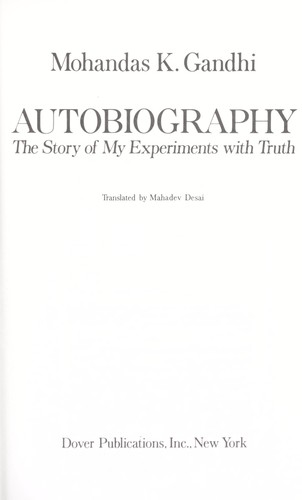
The autobiography of the Great Soul who united India against British occupation through nonviolent resistance. Gandhi lived ascetically and acted as if he accepted every word of the Sermon on the Mount, teaching a lesson that bears repeating in every generation.

The Durants survey over fifty centuries of human civilization, distilling the patterns and lessons that emerge from the whole sweep of history. A guidepost to the future compiled from the deepest study of the past. Meant to be studied, not merely read.

The Durants' informal survey of twentieth-century literature and philosophy, drawn from a lifetime of reading. An easy yet information-dense introduction to the trends of modern writing and the reverberation of nineteenth-century thought.

A Japanese-American woman's account of internment during World War II. Houston reminds us that good Americans also behaved atrociously during the war—a necessary corrective proving that the daily indignities of the camps were America's nightmare.

The Pulitzer Prize-winning definitive account of mankind's most awesome and terrible invention. Rhodes narrates the journey from theoretical physics to the Manhattan Project almost minute by minute with breathtaking narrative skill.
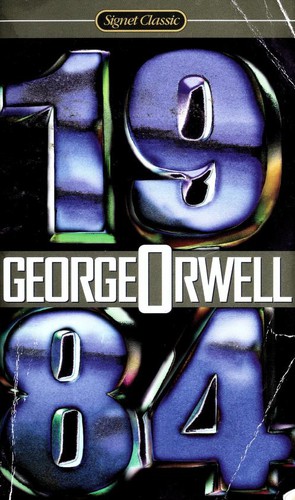
Orwell's nightmarish anti-utopia of a totalitarian state with its 'newspeak,' thought police, and ever-present Big Brother. A warning about what could happen if we aren't carefully vigilant—Winston's defeat is a cautionary tale for every generation.

Held for six and a half years during Mao's Cultural Revolution on trumped-up charges, Nien Cheng held her sanity and her dignity. A tale that emboldens us to believe the human spirit is made from far stronger stuff than we conceive in our darker hours.

The book that created the 'nonfiction novel' genre. Capote's scrupulous attention to detail allows the characters of this horrific Kansas murder to tell their own story, producing the finest true-crime narrative ever written.

A magnificent tour-de-force of the beginnings of the American space program. Wolfe's melodic New Journalism prose flows and sways across the page—the opening chapter alone operates near the level of Mt. Olympus. This work must not be missed.

A Shakespearean drama of transformation: a flawed man consumed in anger finds redemption by forgiving even his enemies. Malcolm's journey from street criminal to revolutionary to global humanitarian—and his violent martyrdom—is one of the great stories of the twentieth century.

Said dismantles the myth of the 'Orient' and shows it to be a patronizing Western construct. A landmark of postcolonial scholarship that empowered the powerless and forced the powerful to see the world as more than one-dimensional.

The autobiography of the Egyptian president who broke down the wall of the Cold War years before Gorbachev. Sadat took the harder road, went to Jerusalem, and changed the world—the figure we should conjure when we think of Islam's best possibilities.

Economics stripped bare of its jargon. Wheelan exposes the myths of the 'dismal science' with clarity and humor, covering the power of markets, the role of government, the importance of trade and human capital—an essential primer for navigating the modern world.

The monumental work that launched the environmental movement. Carson states almost mathematically that what we do to the environment we do to ourselves—a pithy lesson in wisdom taught by indigenous cultures globally, now proven by science.

The book that single-handedly created the self-help genre. Carnegie's timeless principles of human relations—never criticize, make others feel important, frame requests in ways others find motivating—are essentially common sense, which isn't so common.

An opinionated and exuberant guide to the 1001 greatest singles ever made, forming an excellent cross-section of popular music from the latter half of the twentieth century. The starting point of many an evening's enjoyment of truly wonderful music.

Sagan's vision of humanity's future in space, inspired by the last photograph of Earth taken by Voyager 1—a pale blue dot shining from the depths of space. He argues our unending curiosity will inevitably lead us out into the cosmos to find future homes among the stars.
The Peace That Comes of Understanding
This, then, is our Odyssey of books. Here is another world, containing the selected excellence of a hundred generations and a thousand locales; not quite so fair and vital as this actual world of nature and human enterprise, but abounding nevertheless in unsuspected wisdom and beauty unexplored.
When life is bitter, or friendship slips away, or perhaps our children leave us for their own haunts and homes, we shall come and sit at the table with Shakespeare and Goethe, and laugh at the world with Rabelais, and revel in Lincoln's masterly prose. For these are friends who give us only their best, who never answer back, and always wait our call. When we have walked with them awhile, and listened humbly to their speech, we shall be healed of our infirmities, and know the peace that comes of understanding.